Can You Build a Timber Frame House Under Permitted Development?
- Norfolk Building
- Mar 27
- 2 min read

Building a timber frame house is an attractive option for many homeowners due to its speed, efficiency, and sustainability. However, one of the most common questions is whether you can build a timber frame house under permitted development rights, particularly in areas like Norfolk where planning rules can vary depending on location and property type. The answer is not straightforward, as it depends on how the project is defined within planning regulations.
In most cases, constructing a completely new house does not fall under permitted development. Permitted development rights are designed to allow homeowners to make certain improvements or extensions to an existing property without the need for full planning permission. This includes things like rear extensions, loft conversions, and outbuildings within specific limits. A standalone new dwelling, even if it is built using timber frame construction, almost always requires full planning permission from the local authority.
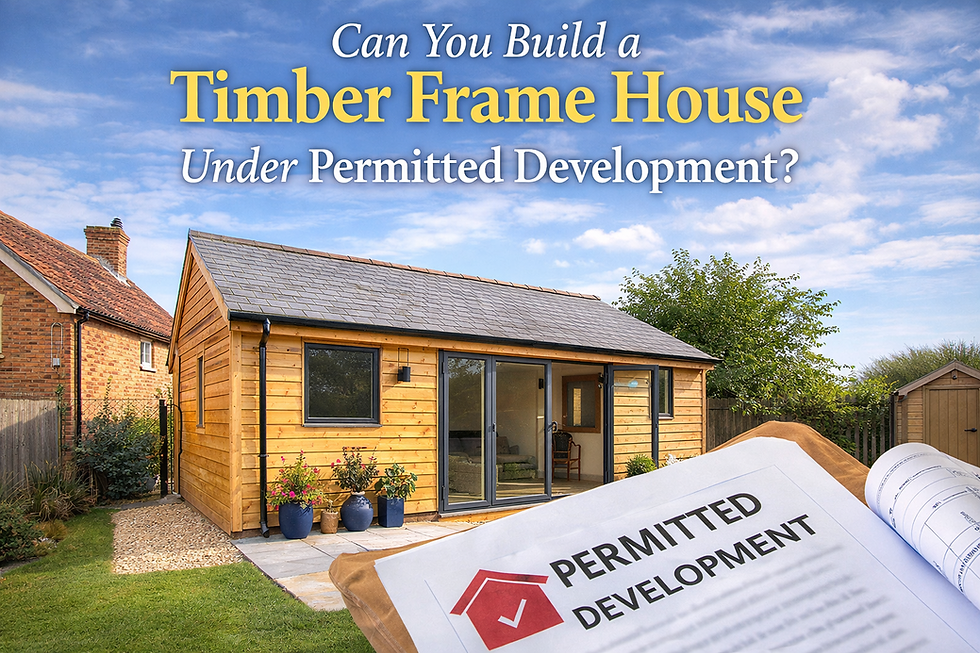
However, there are situations where timber frame structures may fall within permitted development. For example, outbuildings such as garden rooms, garages, or annex-style spaces can often be constructed without full planning approval, provided they meet specific criteria. These rules typically cover factors such as height restrictions, distance from boundaries, overall footprint, and usage. The structure must also be considered incidental to the main house, meaning it cannot be used as a separate, self-contained dwelling.
Timber frame is particularly well suited for these types of permitted development projects. Its lightweight structure, fast installation, and flexibility make it ideal for garden buildings and smaller extensions that fall within planning limits. Many homeowners in Norfolk choose timber framing for home offices, studios, or leisure spaces in their gardens, taking advantage of permitted development to avoid lengthy planning processes.
Another important factor to consider is location. In Norfolk, properties located in conservation areas, Areas of Outstanding Natural Beauty, or those that are listed buildings often have stricter rules. In these cases, permitted development rights may be limited or removed entirely, meaning even small timber frame structures could require planning permission. It is always important to check with the local planning authority before starting any work.
Even if your timber frame project qualifies under permitted development, it will still need to comply with building regulations. These ensure the structure is safe, energy efficient, and built to a suitable standard. Timber frame construction generally performs well in this regard, as it allows for high levels of insulation and precision engineering, but proper design and approval are still essential.
For those considering building a full timber frame home, planning permission will be required, but this does not diminish the advantages of timber construction. Many new builds in Norfolk are now using timber frames because of their speed, sustainability, and adaptability to modern design requirements.
In summary, while you cannot typically build a full timber frame house under permitted development, smaller timber frame structures and extensions may qualify if they meet specific criteria. Understanding the difference between what is permitted and what requires approval is key to planning your project effectively and avoiding unexpected delays.

Comments